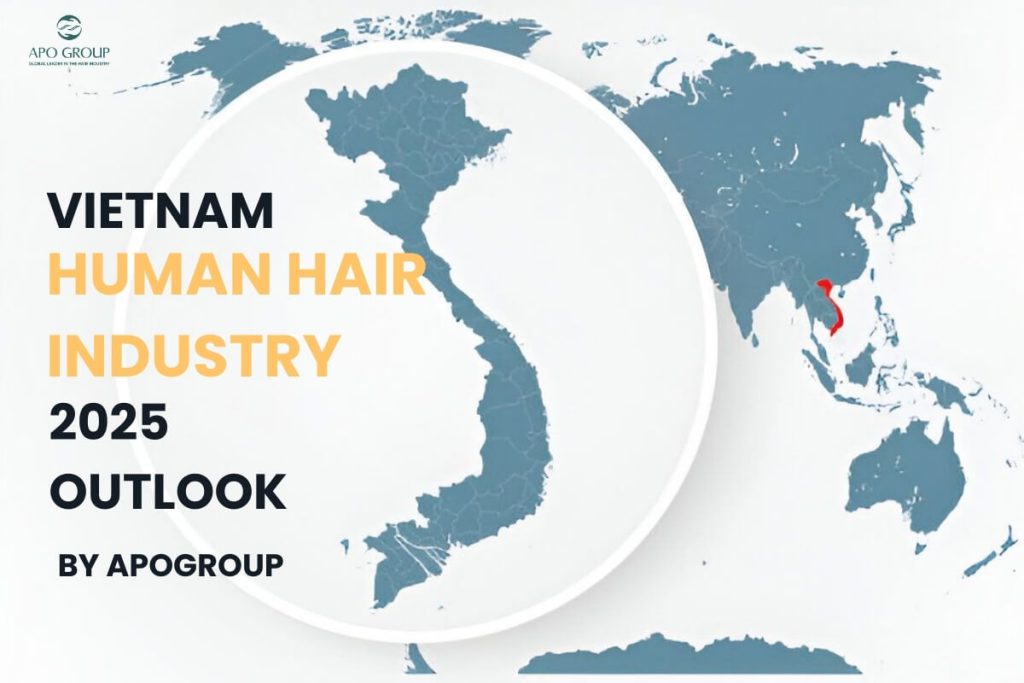
Vietnam Human Hair Industry 2026 Outlook
Human hair extensions have moved from being a luxury product to a global everyday essential. From Lagos to Los Angeles, millions of women rely on extensions and wigs not just for beauty but for confidence, identity, and style. Behind this trend, Vietnam has quietly become one of the most important suppliers in the world. Known for its naturally healthy and durable hair, Vietnam now stands alongside India and China as a major player in the global market. But unlike those countries, Vietnam offers a unique combination of natural supply, ethical sourcing, and modern production capacity. As we look ahead to 2026, it is clear that Vietnam, and APOGROUP in particular, is shaping the future of this dynamic industry. Vietnam’s Position in the Global Hair Market Vietnam’s human hair industry has grown quietly but steadily, establishing itself as a reliable force on the international stage. Every year, thousands of tons of hair extensions are exported from Vietnam, destined for markets in Africa, the United States, Europe, and Asia. Analysts estimate that the global hair extension market will surpass 10 billion USD by 2026, with Vietnam contributing an increasing share to that figure. Compared to its competitors, Vietnam offers a distinctive edge. India, long known for its temple hair donations, produces large volumes but often with coarser, curlier textures that require heavy chemical treatment. China dominates in mass manufacturing, but much of its supply is chemically processed or blended with synthetic fibers to cut costs. Vietnam, by contrast, offers hair that is naturally straight or slightly wavy, collected directly from rural women who lead healthy lifestyles and avoid harsh chemical treatments. This means the hair retains its natural cuticle, strength, and shine. Vietnamese hair is particularly valuable for premium extensions and wigs. Vietnam’s rise has not happened overnight. In the early 2000s, the trade was still in its early stages, with many businesses operating on a small scale. Hair was mostly collected and processed locally, and the supply chains were less structured compared to today. As international demand expanded, Vietnamese suppliers began to professionalize—investing in better sorting techniques, more advanced processing, and reliable logistics. Step by step, what started as a modest trade grew into an organized industry with the capacity to serve large wholesale markets worldwide. With expanded factory capacity and stronger compliance standards, companies like APOGROUP shifted from exporting raw hair to producing finished wigs, weft, keratin tips, and seamless extensions. Today, Vietnam is known not only for the natural quality of its hair but also for the reliability and consistency that global wholesalers value. Key Trends Shaping 2026 As we look ahead, different regions of the world are driving growth in their own ways. Each market brings unique demands and expectations that shape how suppliers like APOGROUP respond. Africa: The Engine of Demand Among all global regions, Africa continues to be the fastest-growing market for wigs and extensions. Nigeria imports around 3,600 tonnes of human hair each year, a trade valued at approximately $352 million in 2023, according to data from The Economist and the Observatory of Economic Complexity. Meanwhile, markets in Ghana, Kenya, and South Africa are also expanding rapidly. African consumers have a strong cultural preference for wigs, sew-ins and braided styles, and demand is expected to grow at double-digit rates through 2026. Vietnamese hair fits perfectly into this landscape. Its durability, affordability, and ability to be supplied in bulk make it a favorite among African wholesalers and retailers. Many buyers in Lagos or Accra now specifically request “Vietnamese hair” because of its reputation for lasting longer and offering better value for money compared to alternatives. US and EU: The Rise of Ethical Sourcing While Africa is driven by sheer demand, Western markets such as the United States and Europe are increasingly defined by values. A 2023 consumer study revealed that 62% of buyers prefer to purchase beauty products that demonstrate clear ethical sourcing and sustainability. For hair extensions, this means transparency: customers want assurance that their products are not linked to exploitation or unfair labor practices. This trend is reshaping the industry. Suppliers who cannot prove where their hair comes from or how it is produced risk losing trust and market share. Vietnam is well-positioned to meet this expectation, especially companies like APOGROUP that have passed factory audits and built transparent sourcing partnerships with local communities. Product Trends for 2026 The types of products in demand are also shifting. Lace wigs, particularly full lace and front lace, are in strong demand across Africa. In the United States and Europe, keratin tip extensions (I-tip, U-tip, V-tip, F-tip and flat tip) continue to be staples in salons. Seamless options, such as tape-in and invisible seamless clip-in extensions, are growing in popularity among younger clients who want quick application and a natural finish. In South America, especially in Brazil, Peru, and Colombia, there is a growing appetite for thicker bulk bundles, straight, body wave, and curly textures that reflect local beauty preferences. Wigs and light colored extensions are also becoming more mainstream as fashion trends in the region evolve. Across Asia, demand is being driven by both affordability and convenience. Markets such as Korea, Japan and Philippines are seeing rapid growth in tape-ins, weft bundles, and ready-to-wear wigs, appealing to younger consumers and influencers who prefer versatile, easy-to-style solutions. This diversity in demand demonstrates the dynamic nature of the global hair extension industry. For suppliers, staying agile and offering a wide range of products while maintaining consistent quality remains crucial to meeting the diverse expectations of these varied markets. Opportunities and Challenges The Vietnamese hair industry faces a future filled with both promise and responsibility. Opportunities One of the country’s biggest advantages is the natural supply chain. Many Vietnamese women, particularly in rural areas, maintain long, untreated hair as part of a cultural tradition. This creates a steady and authentic source of raw material that is rare in today’s world. Combined with competitive pricing, Vietnam offers buyers both quality and value. This allows wholesalers to achieve healthier profit